Black Triggerfish: A Robust Choice for Seasoned Fishkeepers
The Black Triggerfish, a circumtropical species found in oceans worldwide, is a lesser-known member of the triggerfish family that appeals to advanced marine aquarists. Unlike many of its more aggressive relatives, this fish can be relatively easy to maintain in a spacious, fish-only setup, provided its needs for swimming room and hiding spots are met. Its ability to learn hand-feeding and produce distinct sounds makes it a fascinating addition to a large home aquarium.
In the wild, Black Triggerfish inhabit coral and rock formations just outside reef areas, emerging in large schools near the surface to feed on drifting zooplankton and algae. They are distributed across the Indo-Pacific, including Hawaii, Polynesia, the East Indies, the Indian Ocean, the Red Sea, and off the southern coast of Africa. A similar species is also found in the tropical Atlantic Ocean.
Appearance and Unique Traits
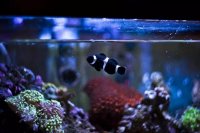
Though appearing black in the water, the fish's body reveals a dark blue to blue-green hue with horizontal markings when viewed under proper lighting. Thin, light blue-turquoise lines adorn the face and around the eyes, while bold white lines run along the bases of the soft dorsal and anal fins. Like all triggerfish, it possesses a hard spiny dorsal fin that can be locked upright as a defense mechanism or to wedge itself into crevices for protection. This spine can also be used as a weapon, so aquarists should handle the fish with gloves to avoid injury.
Triggerfish are also known for their vocalizations, and the Black Triggerfish is no exception. It can produce "put put put" sounds or growls, which are amplified by its swim bladder—a trait that adds to its appeal for hobbyists seeking interactive pets.
Compatibility and Tank Setup
Despite being one of the least aggressive triggerfish, the Black Triggerfish is still a poor choice for reef tanks. It will nip at corals and consume reef invertebrates, including sea urchins, and may attack smaller, passive fish. Therefore, it is best housed in a fish-only tank with larger, robust tankmates that can hold their own. Suitable companions include moray eels, snappers, angelfish, and tangs. However, Lionfish should be avoided, as their slow-moving nature and long fins make them easy targets for the triggerfish's nipping behavior.
Given its active nature, the Black Triggerfish requires a large tank with ample swimming space and plenty of hiding spots, such as live rock formations. In smaller tanks, the species tends to become more aggressive, so a spacious environment is crucial for maintaining its relatively calm demeanor.
Diet and Feeding
As an omnivore, the Black Triggerfish thrives on a varied diet that includes shrimp, squid, clams, fish, and other meaty foods suitable for carnivores, along with marine algae and vitamin-enriched herbivore preparations. Feeding three times a day, offering only what the fish can consume within five minutes, is recommended. While triggerfish can be trained to eat from the owner's hand, caution is advised, as they can deliver painful bites.
Reproduction and Sexual Differences
There are no obvious external differences between male and female Black Triggerfish. In the wild, they select mates, lay and fertilize eggs, and dig a nest in the seafloor where the eggs are "glued" until hatching. If the substrate is too hard, they may cover the eggs with broken shells. Both parents guard the nest, with females taking on more of the duty, and they become highly aggressive during this period. Notably, Black Triggerfish are not bred in captivity, so all specimens in the aquarium trade are wild-caught.
For the advanced aquarist prepared to meet its spatial and dietary requirements, the Black Triggerfish offers a rewarding and interactive marine keeping experience, with its intelligence and vocalizations setting it apart from many other fish.