Keeping Dwarf Clawed Frogs: A Guide to Aquatic Habitat and Health
Dwarf clawed frogs, native to the ponds and rivers of Sub-Saharan Africa from Nigeria and Sudan to South Africa, have become a popular choice for home aquarists seeking a low-maintenance aquatic pet. These fully aquatic amphibians, also found in isolated populations in North America, South America, and Europe, require a setup similar to a communal tropical freshwater fish tank. However, they are not suited for handling, and their care involves specific tank conditions and feeding routines that differ from typical pet frogs.
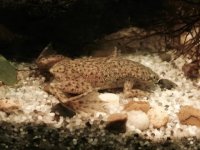
These frogs are characterized by their brown or dull green coloration with darker spots, and three clawed toes on their back feet, which they use to tear at decaying food. They are scavengers by nature, consuming almost anything living, dying, or dead, and rely on their sensitive fingers and sense of smell to locate food. In the wild, they are plentiful, but the pet trade may contribute to amphibian population declines, making the choice of captive-bred specimens important for conservation.
Behavior and Temperament
Dwarf clawed frogs are relatively easy to care for, requiring minimal interaction from their owners. Their primary needs are feeding and water changes. Unlike many other pet frogs, they should not be handled because their skeletal systems are adapted to a weightless aquatic environment and cannot support their bodies under normal gravity; frogs that escape the tank will likely die. They can be kept in groups or with peaceful community fish of similar size, but overcrowding can cause stress and health issues.
These frogs reach adulthood at about nine months. Males develop small pink or white glands behind their front legs and will sing or hum to attract mates. Females are generally larger, with a more prominent bump between the hind legs where the cloaca is located. In the tank, they use their hands to shove food into their mouths, a behavior that is both fascinating and practical for bottom feeding.
Housing and Tank Setup
Setting up a tank for dwarf clawed frogs is less demanding than a typical fish tank, but it still requires a sturdy floor to support the weight of water and equipment. Filtration is optional if only frogs are kept, as frequent partial water changes can maintain water quality. However, if fish are added, a filter is necessary, but it should be one that disturbs the water minimally, as frogs prefer still water and can get stuck in intake tubes.
These frogs live primarily at the bottom but need to surface for air, so a tank with a shallow depth is preferable. Allow about one gallon of water per frog, and ensure a tight-fitting lid to prevent escape. The water temperature should be maintained between 75 and 80 degrees Fahrenheit (24 to 27 degrees Celsius). Hiding spots are essential, using live or silk plants, smooth aquarium decorations, or small terra cotta pots placed on their sides. Avoid any sharp or rough materials that could damage their delicate skin.
It is critical to never use soap or cleaning chemicals on the tank or any equipment, as amphibians have porous skin and are highly susceptible to poisoning. Similarly, handling frogs with bare hands is harmful due to oils and salts on human skin. If moving is necessary, use a plastic pitcher or powder-free nitrile gloves.
Feeding and Nutrition
As bottom feeders, dwarf clawed frogs should be offered sinking foods. A varied diet of live, frozen, or freeze-dried options such as bloodworms, tubifex worms, daphnia, brine shrimp, blackworms, or chopped earthworms is recommended. They rarely accept flaked food, and some may take frog-specific pellets, but these can foul the water quickly. Feed them once or twice a day, using a small saucer to place food if they are ingesting substrate.
Health and Disease Prevention
Healthy dwarf clawed frogs are active swimmers with clear eyes and smooth skin, and they hide frequently. They are prone to bacterial and fungal infections, often linked to poor water quality. A fungal infection appears as a white, cotton-like growth on the skin and discolored eyes, while bacterial infections show as cloudy eyes and redness or sores. Both require immediate veterinary attention and can be fatal if untreated. Another condition, known as dropsy or bloat, causes the frog to look like an overfilled balloon and is thought to be related to lymphatic system imbalance, possibly influenced by water quality and mineral levels.
When selecting a dwarf clawed frog, it is advisable to purchase only those that are captive-bred locally and tested for disease. Wild-caught frogs may contribute to the decline of wild populations, and the pet trade is a factor in the global amphibian extinction crisis, along with the spread of chytrid fungus. Although finding such frogs may be challenging, it is a responsible choice for prospective owners.
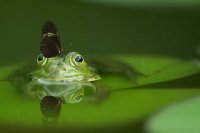
Dwarf clawed frogs are often confused with African dwarf frogs, but they differ in physical characteristics: dwarf clawed frogs have webbed back feet but non-webbed front digits, eyes on top of the head, and flat snouts, while African dwarf frogs have four webbed feet, eyes on the side of the head, and pointed snouts. Understanding these differences is key to proper identification and care.