Bearded Dragon Care: Tank Setup, Feeding, and Health Essentials
Bearded dragons, native to Australia, have become popular pets due to their docile nature and intriguing behaviors. However, their care involves more than just a tank and some crickets. Owners must replicate their natural arid environment with precise temperature gradients, UV lighting, and a varied diet to ensure their well-being.
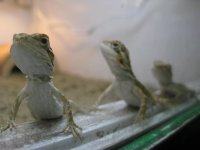
These lizards, often called "beardies," are moderately sized, typically light tan to brown, with spiky collars around their necks. While they are generally considered suitable for beginners, their complex needs require a commitment of time and resources. They are diurnal, active during the day, and often enjoy being handled, sometimes perching on their owner's shoulder. However, males should be housed separately due to territorial behavior.
Habitat Essentials: Tank, Heat, and Light
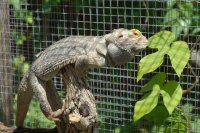
For a single adult, a 55- to 75-gallon tank with a secure screen top is recommended. Juveniles can start in smaller enclosures but will quickly outgrow them. Bearded dragons are semi-arboreal, so providing sturdy branches, rocks, and half logs for climbing is beneficial, especially in the basking area. Hiding spots, such as hollow logs, help them feel secure.
Temperature is critical. A thermal gradient should be established, ranging from 80-85°F on the cool side to 95-105°F in the basking spot. Nighttime temperatures can drop to 65-70°F. Heat can be provided via incandescent bulbs, ceramic heaters, or mercury vapor bulbs. Use thermometers to monitor temperatures at both ends of the gradient and at the basking spot, adjusting wattage and distance as needed.
UV lighting is equally important. Special fluorescent bulbs that emit UV light should be placed within 12 inches of the dragon, and the light should pass through a screen top, not glass, which filters out UV rays. A consistent 12-hour light/dark cycle is recommended, and using a timer can help maintain regularity. Brief outdoor time in a secure, shaded area can provide natural sunlight, but never leave a dragon in a glass tank outdoors, as overheating can be fatal.
Humidity should be maintained around 35-40%, mimicking their arid habitat. In high-humidity areas, misting may be necessary. A hydrometer can help monitor levels.
Substrate and Feeding
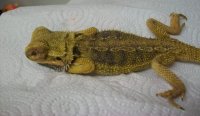
Substrate choice is important, especially for juveniles. Loose substrates like sand pose a risk of ingestion, leading to intestinal impaction. Paper towels or reptile carpet are safer for young dragons. Adults can have washed play sand, but avoid fine silica sand, wood shavings, corn cob, or walnut shells. If sand is used, a cat litter scoop can help remove feces.
Bearded dragons are omnivores, eating insects and plant matter. Feeding frequency depends on age: babies may eat three times daily, while adults need at least once every 24 hours. Insects should be no larger than the space between the dragon's eyes. Offer a variety of insects for adults, including waxworms, silkworms, and superworms, but limit mealworms due to their hard exoskeletons. Insects should be gut-loaded and dusted with calcium and vitamin D supplements to prevent metabolic bone disease. A multivitamin can be offered once a week.
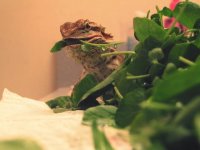
In addition to insects, provide a salad of chopped leafy greens and vegetables in a shallow bowl. Water should be available in a shallow dish, and some dragons enjoy soaking in a larger dish.
Health Concerns and Selection
Metabolic bone disease is a serious risk, caused by an imbalanced calcium-to-phosphorus ratio, leading to soft bones and fractures. Respiratory infections, indicated by wheezing or mucus around the nostrils, are also common. Impaction from ingesting indigestible substrates or insects can occur, so careful feeding is essential.
Most bearded dragons in the U.S. are captive-bred, as Australia prohibits wildlife export. Reputable breeders and rescue organizations are good sources. Young dragons cost around $50, while adults may be about $100. When choosing a dragon, look for an active animal with healthy skin, avoiding those with swollen joints, discharge from eyes, nose, or mouth, or runny droppings.
For those considering similar pets, green anoles, veiled chameleons, and crested geckos are alternatives. Proper care ensures a rewarding experience with these fascinating reptiles.