Six Line Wrasse: Aggressive Reef Fish Demands Careful Tank Planning
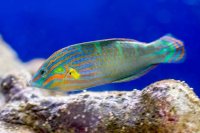
For saltwater aquarium enthusiasts seeking a splash of color, the Six Line Wrasse (Pseudocheilinus hexataenia) is a common choice, but its aggressive temperament demands respect. Native to the coral reefs of Fiji and other Indo-Pacific regions, this fish is not a beginner's pet. Its vivid blue and pink body, marked by six distinct orange-red bands, makes it a striking centerpiece, yet its behavior toward other tank inhabitants can be a source of conflict.
In the wild, these wrasses are found in shallow, clear, warm waters, where they spend their days foraging in the nooks and crannies of the reef. This natural behavior translates to the home aquarium, where they will constantly explore live rock and substrate. This foraging is not just a pastime; it is a key part of their diet, as they prey on small invertebrates, including flatworms, snails, and even urchins. This can be beneficial for controlling certain pests, but it also means that keeping snails or small crustaceans in the same tank is a risky proposition.
Why Aggression Is a Key Consideration
The Six Line Wrasse is known for its aggressive behavior, particularly towards other fish. This is most pronounced against smaller, peaceful wrasse species, which are often seen as rivals. To mitigate this, aquarium keepers should add the wrasse to the tank last, after all other fish have established their territories. This helps to reduce the wrasse's perception of a need to compete for space and food. Even with this precaution, aggression can flare up over food or territory, so providing ample space and scattering food throughout the tank are essential strategies to minimize conflict.
For those considering tankmates, the options are limited. Larger, semi-aggressive wrasse species, such as the banana wrasse or dragon wrasse, may be compatible, but they require significantly more space due to their size and activity levels. It is generally recommended to keep only one Six Line Wrasse per aquarium, unless the goal is breeding, which is a rare and challenging endeavor. The fish's aggressive nature makes pairing difficult, and even then, successful reproduction is uncommon.
Diet and Feeding Habits
As a carnivore, the Six Line Wrasse thrives on a protein-rich diet. In the aquarium, a high-quality carnivorous pelleted food should be the staple, as it provides essential vitamins. This should be supplemented with meaty treats such as mysis shrimp, brine shrimp, or other frozen carnivorous preparations. Being a tropical species, it requires frequent feedings—at least twice a day, or three smaller meals, to maintain its health and energy levels.
Breeding Challenges and Gender Identification
One of the most challenging aspects of keeping Six Line Wrasses is breeding. There are no externally distinguishable differences between males and females, making it nearly impossible to select a pair. Some hobbyists report that fish may become more vibrantly colored before spawning, with males showing brighter hues, but this is not a reliable indicator. In the home aquarium, most wrasses are kept singly, which eliminates the possibility of reproduction. Even if a pair were to spawn, the species is a broadcast spawner, releasing eggs and sperm into the water column. These reproductive products are often swept into the filtration system, and many spawnings go unnoticed by the aquarist.
For those interested in similar species, the dragon wrasse, bird wrasse, and yellowtail coris wrasse are worth researching, though each has its own specific care requirements. Ultimately, the Six Line Wrasse is a beautiful and active fish that can be a rewarding addition to a well-planned saltwater aquarium, but its aggressive tendencies and specific dietary needs mean that it is not a fish to be added on a whim. Careful research and tank management are the keys to a harmonious community.